

Design Notes #02 - Why Voltage Drop Matters in Electrical Design
A Detail That Defines Performance
Why Voltage Drop Matters in Electrical Design: A Detail That Defines Performance
When architects envision a building, they focus on space, light, and experience. Engineers focus on performance and reliability. Contractors focus on constructability and delivery. Electrical design sits at the intersection of all three—and one often overlooked factor can quietly determine whether an electrical system performs as intended:
Voltage drop.
While voltage drop may sound like a minor technical detail, it has a direct impact on equipment performance, energy efficiency, and the long-term reliability of a building’s electrical infrastructure. Thoughtful electrical design considers voltage drop early in the process to ensure systems operate safely and efficiently.
What Is Voltage Drop?
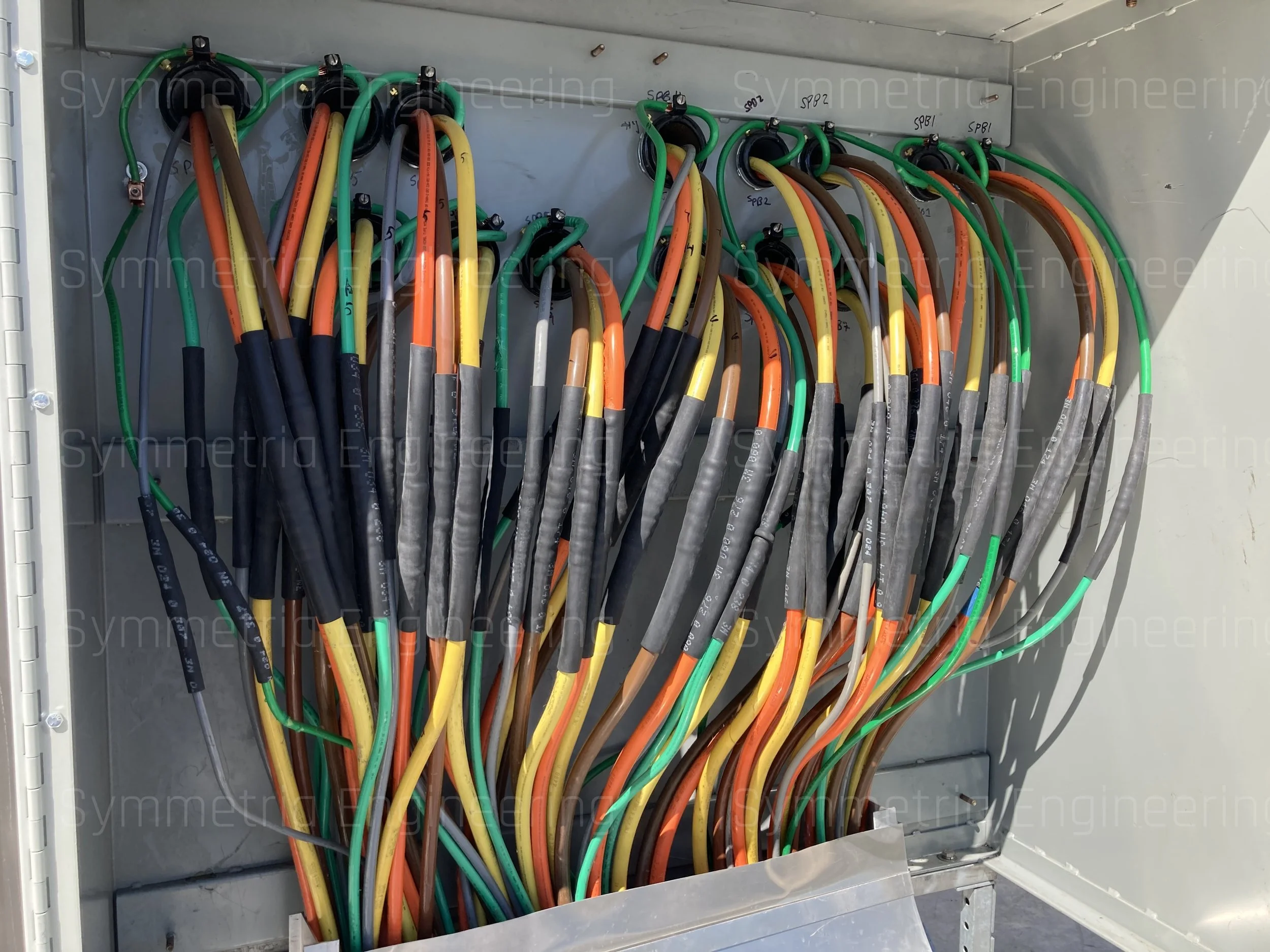
Voltage that occurs as electrical current travels through conductors
Voltage drop refers to the reduction in voltage that occurs as electrical current travels through conductors such as wires and cables. Every conductor has resistance, and as electricity flows through that resistance, a portion of the voltage is lost.
The longer the conductor run or the higher the electrical load, the greater the voltage drop becomes.
For example:
Long feeder runs to remote panels
Large motor loads
Distributed equipment across a facility
High-current electrical services
All can contribute to excessive voltage drop if not properly accounted for during design.
While the National Electrical Code does not strictly mandate voltage drop limits, it recommends maintaining:
3% maximum voltage drop on branch circuits
5% total voltage drop for feeders and branch circuits combined
These guidelines exist for a reason: beyond these levels, system performance can begin to degrade.
Why Voltage Drop Is Critical to Good Electrical Design
1. Equipment Performance and Longevity
Many building systems rely on precise voltage levels to operate correctly. When voltage drops below acceptable levels, equipment can experience:
Reduced motor torque
Overheating
Reduced efficiency
Premature equipment failure
For example, motors in HVAC systems may struggle to start under low-voltage conditions, drawing higher current and stressing both the equipment and electrical infrastructure.
For facilities with critical systems—such as commercial buildings, multifamily housing, or industrial spaces—this can translate into maintenance issues, tenant complaints, or system downtime.
2. Energy Efficiency and Operating Costs
Voltage drop increases electrical losses within conductors. These losses appear as heat, meaning the electrical system is consuming energy that never reaches the intended equipment.
Over time, these inefficiencies can increase energy costs and reduce the overall performance of the building’s electrical infrastructure.
In larger facilities with long distribution runs, careful conductor sizing to minimize voltage drop can lead to measurable operational savings over the life of the building.
3. Supporting Modern Electrified Buildings
Buildings today are becoming increasingly dependent on electrical systems. Consider the growing presence of:
Electric vehicle charging infrastructure
Electrified HVAC systems
Data and communications equipment
High-density lighting systems
Commercial kitchen equipment
These loads often require long feeder runs and high current levels, making voltage drop an increasingly important design consideration.
Without careful planning, voltage drop can become a hidden limitation on the building’s electrical performance.
4. Construction Efficiency and Avoiding Late Design Changes
Voltage drop is best evaluated during early design, when electrical distribution paths and equipment locations are still flexible.
When voltage drop is overlooked until later stages of a project, it can lead to:
Larger conductor sizes than originally planned
Additional conduits
Relocation of electrical equipment
Unexpected cost increases
By addressing voltage drop during the engineering phase, project teams can optimize routing, panel locations, and conductor sizing before construction begins.
For contractors, this reduces the risk of redesigns and field conflicts.
5. Improving System Reliability
Voltage drop is not just about efficiency—it is about system stability.
Properly designed electrical distribution systems ensure that equipment receives the voltage it was designed to operate at. This improves reliability for critical building systems such as:
Mechanical equipment
Fire life safety systems
Lighting infrastructure
Data and communication equipment
A well-engineered system minimizes voltage fluctuations and ensures consistent performance across the facility.
Voltage Drop Is a Design Strategy—Not Just a Calculation
Effective voltage drop management goes beyond simple calculations. It requires thoughtful electrical system planning, including:
Strategic panel and switchboard placement
Efficient feeder routing
Appropriate conductor sizing
Coordination with architectural layouts
Consideration of future expansion loads
Electrical engineers who evaluate voltage drop early in the design process can create systems that are more efficient, more reliable, and easier to construct.
Designing Electrical Systems That Perform
Every building relies on its electrical system to function reliably for decades. Small design decisions—like accounting for voltage drop—can have a significant impact on long-term performance.
At Symmetria Engineering, we approach electrical design with a focus on precision, efficiency, and collaboration. By working closely with architects, engineers, and contractors, we design electrical systems that support the performance goals of the entire project team.
From residential developments to large commercial facilities, our goal is simple: deliver electrical designs that work seamlessly from the first day of operation to the decades that follow.