

Power Forensics #01- What Caused it: Phase-Phase-Phase Fault
Case Study: The Dangers of Live Work on 480V Panels
In the construction industry, schedules are tight and downtime is expensive. When a project requires modifications to an existing electrical system—such as adding a new breaker or feeder—there is often pressure to perform the work without shutting down power.
While this may seem like a practical solution to keep a facility operating, working on energized equipment—particularly 480V distribution panels—can be extremely dangerous and, in some cases, deadly.
This case study highlights why live electrical work presents serious risks and why careful planning and engineering oversight are essential when modifying energized systems.
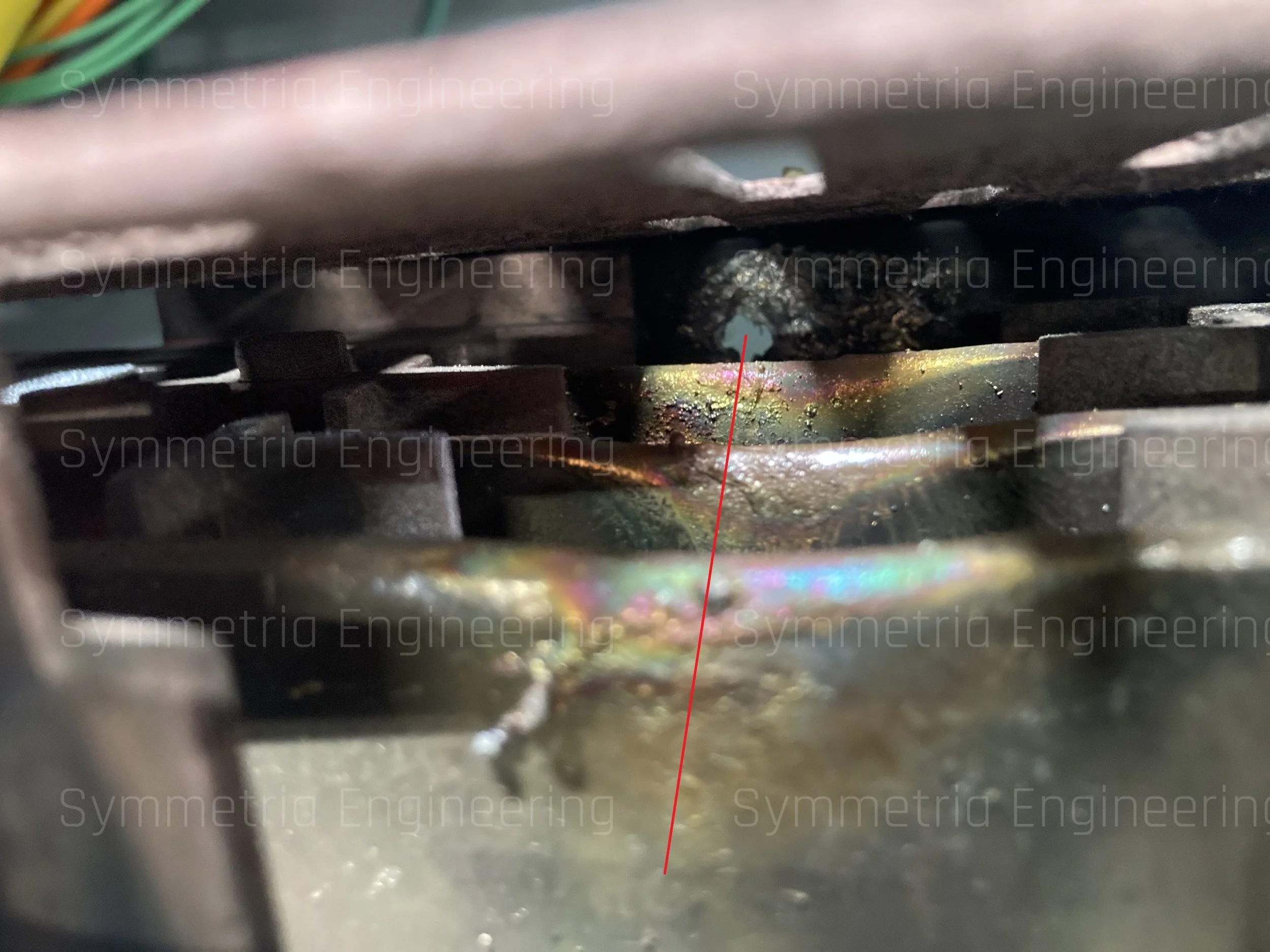
Fault Damage - Red line approx path of grounding conductor that caused fault
The Scenario
A commercial tenant improvement project required the installation of a new 100A feeder to serve additional mechanical equipment. The building was powered by a 480/277V electrical distribution system fed from a main switchboard.
To complete the installation, the contractor needed to:
Install a new breaker in an existing 480V panelboard
Pull new feeder conductors through an existing conduit pathway
Terminate the conductors at the new breaker
The building owner requested that power remain on during the work to avoid disrupting ongoing operations.
At first glance, this request may seem reasonable. However, energized work inside a 480V panel presents serious hazards.
Why 480V Electrical Systems Are So Dangerous
Electrical distribution systems operating at 480 volts carry substantial energy. In many commercial facilities, these systems are capable of delivering tens of thousands of amps of fault current in the event of a short circuit.
Inside an energized panelboard, several hazards exist simultaneously:
Exposed energized bus bars
Energized breaker terminals
Tight working clearances
Metal tools and conductors being installed
Simply pulling conductors through a panelboard while it is energized can create the conditions for a catastrophic fault.
The Risk During Cable Installation
In this case, the most dangerous step in the process was pulling feeder conductors into the energized panel.
During cable installation, several things can go wrong:
A conductor insulation jacket could be damaged while being pulled
A conductor could slip and contact energized bus bars
A tool or pulling device could bridge phases
The cable could swing into live components during installation
If a conductor accidentally contacts energized components while being installed, it can create a phase-to-phase or phase-to-ground fault.
The result can be instantaneous and violent.
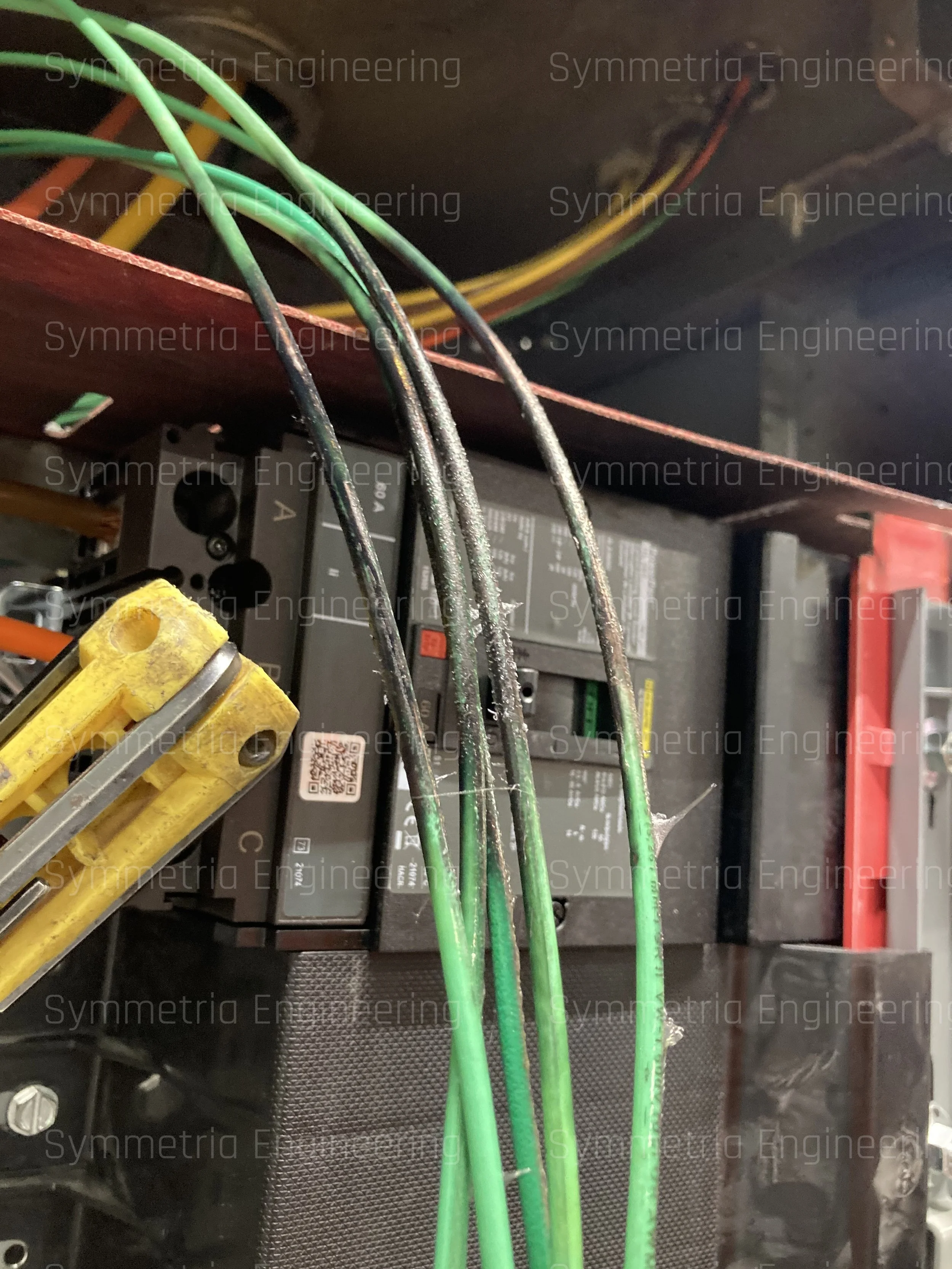
Damaged Conductors
The Consequence: Arc Flash
When an electrical fault occurs in a high-energy system, it can trigger an arc flash—a powerful release of thermal energy caused by an electrical arc.
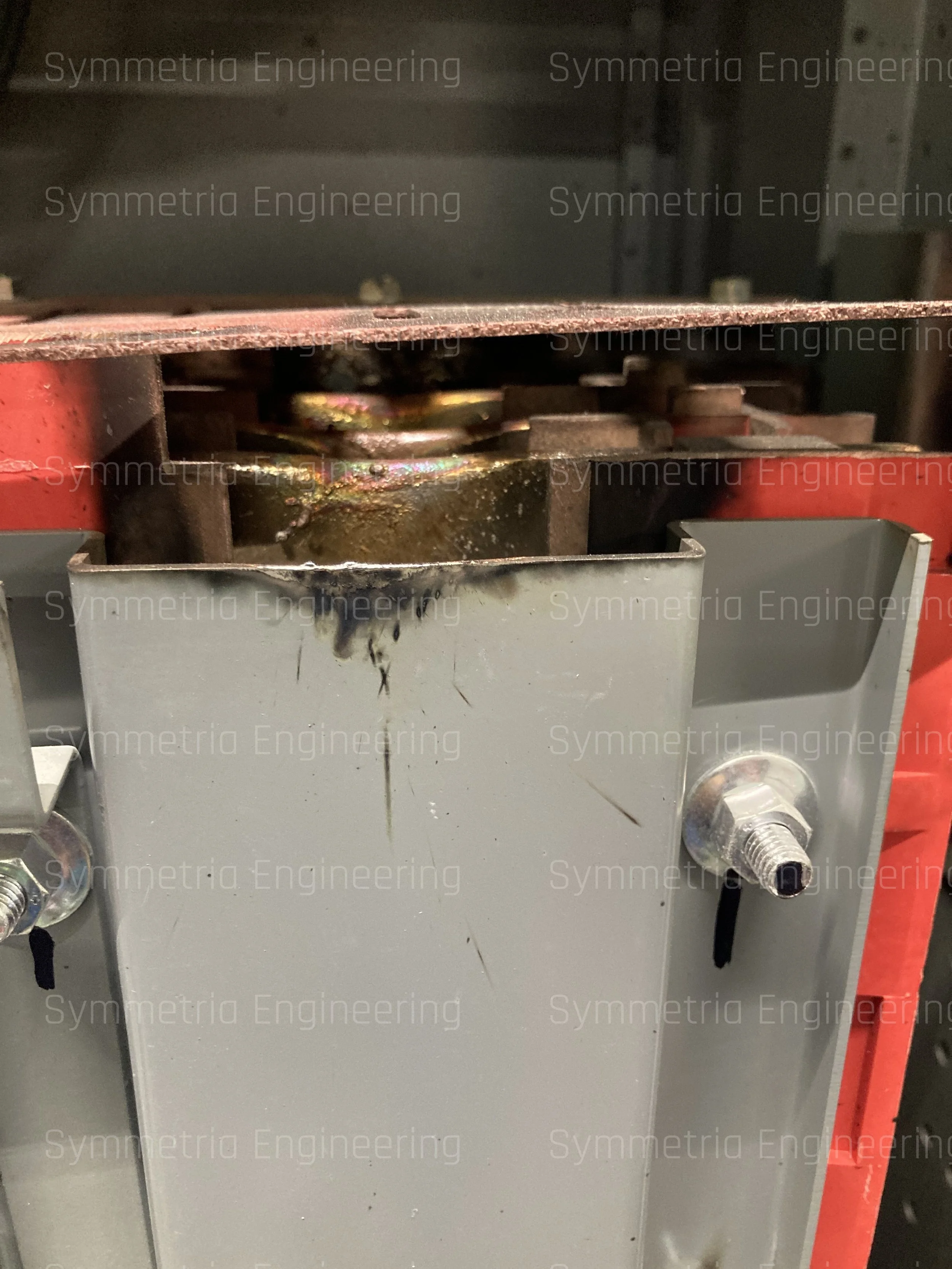
Busbar Damage from Arc Event
Arc flash events can produce:
Temperatures exceeding 35,000°F
Explosive pressure waves
Molten metal fragments
Severe burns or fatal injuries
Even workers wearing protective equipment can be severely injured if they are too close to the fault.
Standards such as NFPA 70E, published by the National Fire Protection Association, emphasize minimizing energized work whenever possible because of these hazards.
Why De-Energizing Is Often the Safest Approach
The safest way to modify electrical distribution equipment is to de-energize the system and implement proper lockout/tagout procedures.
While shutting down power may seem disruptive, it significantly reduces the risks associated with:
Arc flash hazards
Accidental contact with energized components
Equipment damage
Worker injury or fatality
Proper shutdown planning can often be coordinated during off-hours or scheduled maintenance windows to minimize operational impacts.
The Role of Electrical Engineering in Safe System Modifications
Electrical engineering plays an important role in ensuring modifications to electrical systems are performed safely and efficiently.
Before work begins, engineers can evaluate:
Available fault current at the panel
Arc flash incident energy levels
Equipment ratings and clearances
Feeder routing and installation methods
Safe shutdown strategies
This analysis helps contractors and facility owners make informed decisions about how work should be performed.
In many cases, careful engineering coordination allows modifications to occur during planned outages with minimal disruption while significantly improving safety.
Protecting Workers and Projects
Electrical systems are the backbone of modern buildings, but they must be approached with respect and proper planning.
Attempting to perform energized work inside a 480V panel—especially while installing new conductors—introduces risks that can have severe consequences for workers and project teams.
By prioritizing safety, coordinating shutdowns when necessary, and involving qualified electrical engineers early in the process, project teams can protect both people and infrastructure.
Engineering for Safety and Reliability
At Symmetria Engineering, we work closely with architects, contractors, and facility owners to design electrical systems and modifications that prioritize safety, code compliance, and constructability.
Whether a project involves expanding an existing electrical system or designing a new one, our goal is to ensure that electrical infrastructure supports the project safely from the first day of construction through decades of operation.
Thoughtful engineering doesn’t just keep projects on schedule—it helps ensure that everyone goes home safely at the end of the day.