

Facility Optimization #01 - The Case for K Rated Transformers
Harmonics - The Silent Enemy
Over the past decade, LED lighting has transformed commercial and industrial facilities. From office buildings to distribution centers, LEDs have significantly reduced energy consumption, improved lighting quality, and lowered maintenance costs.
But while LEDs improve efficiency on the lighting side, they introduce a new challenge on the electrical infrastructure side—harmonic currents.
In many facilities, LED lighting systems are still fed by standard transformers originally designed for linear loads. When these systems are connected to transformers not designed to handle harmonic-rich loads, the result can be excess heating, reduced transformer life, and electrical system inefficiencies.
For this reason, many facilities are now evaluating whether upgrading from a K-0 transformer to a higher-rated K-factor transformer—such as K-13 or K-20—can improve reliability and system performance.
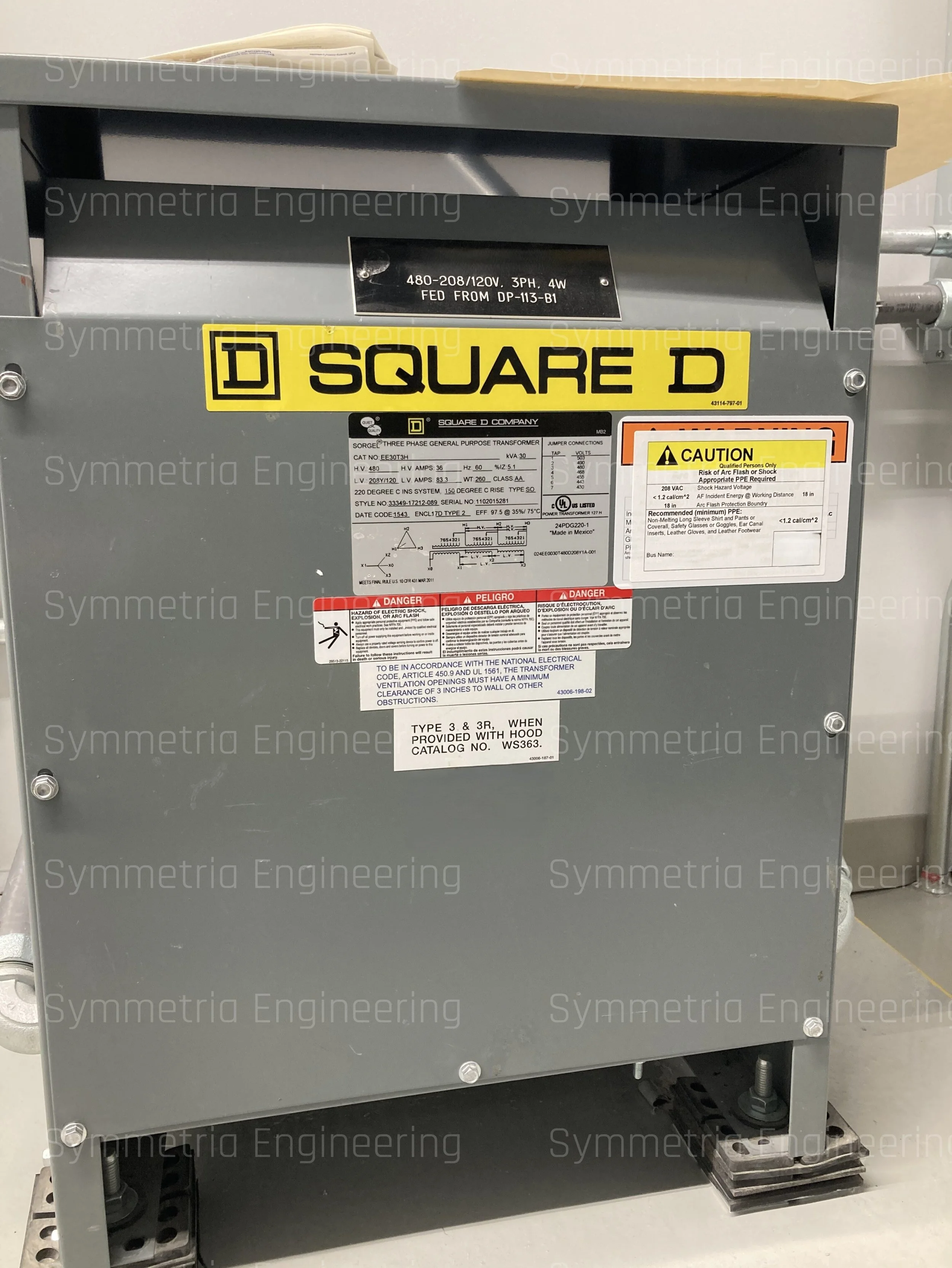
Standard Delta/Wye Dry-Type Transformer
The Hidden Electrical Impact of LED Lighting
LED fixtures rely on electronic drivers to convert incoming AC power into the DC power required by the LEDs. These drivers use power electronics that draw current in short pulses rather than smooth sinusoidal waves.
This creates what electrical engineers refer to as nonlinear loads, which generate harmonic currents.
Harmonics are higher-frequency electrical currents that distort the normal waveform of power in the system. While the building may still operate normally, these harmonic currents can introduce several hidden problems:
Increased transformer heating
Higher neutral currents
Reduced transformer lifespan
Lower system efficiency
These issues are especially common in facilities where large numbers of LED fixtures operate simultaneously.
Why Standard Transformers Struggle with Harmonics
Traditional transformers—often referred to as K-0 transformers—are designed to support linear loads such as motors, resistive heating elements, or traditional lighting systems.
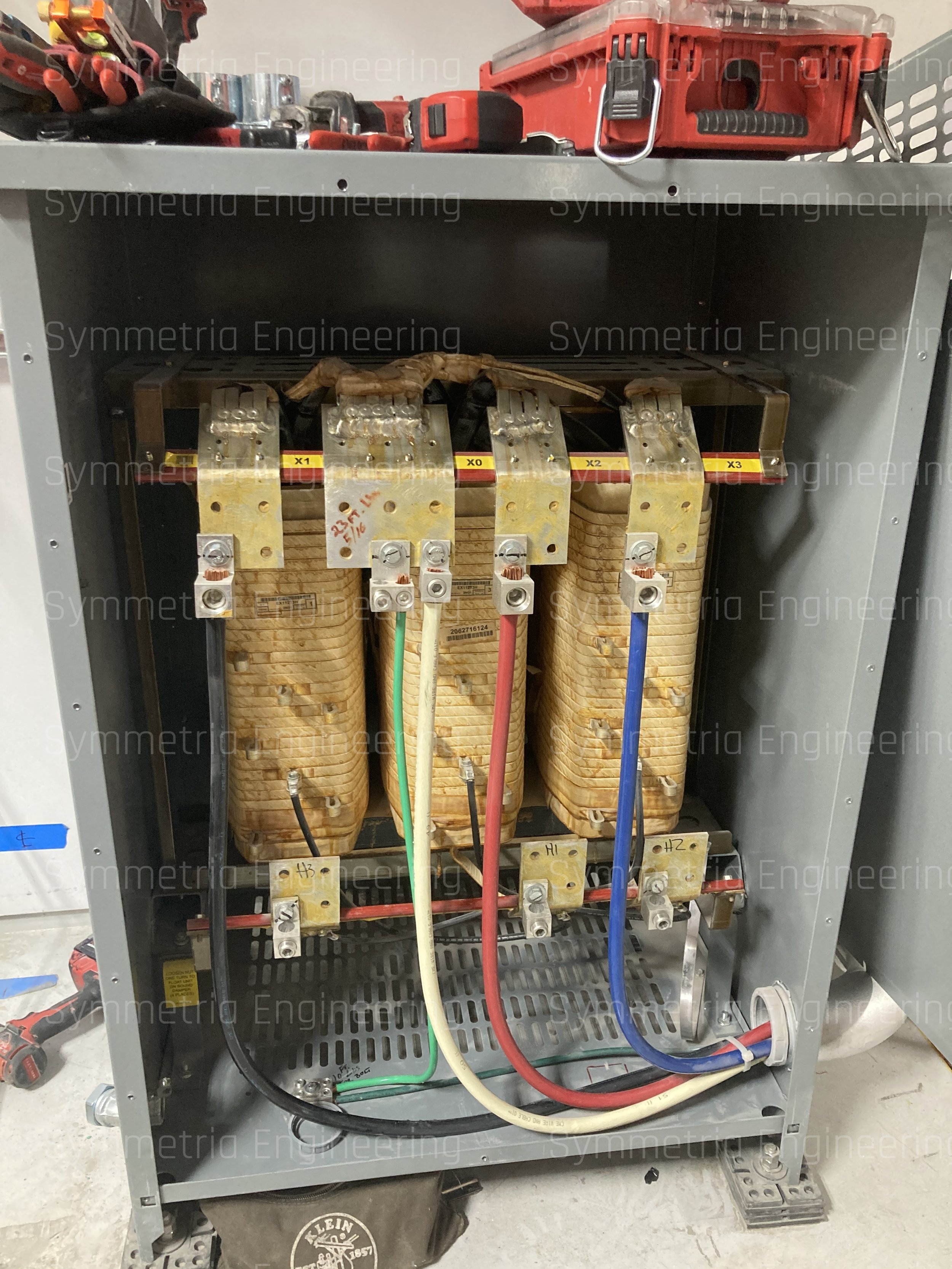
Standard Delta/Wye Dry-Type Transformer
They are not optimized for the harmonic-rich currents produced by modern electronic loads like LED drivers.
When harmonic currents flow through a standard transformer, they can create additional heating in the transformer windings and core. Over time, this excess heat can lead to:
Insulation breakdown
Reduced transformer life expectancy
Unexpected maintenance issues
Potential transformer failure
In facilities with extensive LED lighting installations, this effect can become significant.
What Is a K-Rated Transformer?
A K-rated transformer is specifically designed to handle harmonic currents generated by nonlinear loads.
The K-factor rating indicates how much harmonic current the transformer can safely accommodate without excessive heating. Higher K-factor ratings mean the transformer is better suited for environments where harmonic loads are present.
For example:
K-0: Designed for linear loads
K-4 to K-13: Suitable for moderate harmonic environments
K-20 and above: Designed for high concentrations of nonlinear loads
Facilities with extensive LED lighting, electronic equipment, and modern building technologies often benefit from higher K-rated transformers.
Why Upgrading to K-20 Can Improve Facility Performance
For buildings with large LED lighting installations, upgrading to a K-20 transformer can provide several operational advantages.
1. Improved Thermal Performance
K-rated transformers are designed with enhanced winding configurations and thermal capacity that allow them to safely dissipate the heat generated by harmonic currents.
This helps prevent overheating and protects the transformer from premature failure.
2. Increased Equipment Lifespan
Electrical equipment that operates under excessive thermal stress tends to experience reduced lifespan. By properly managing harmonic currents, K-rated transformers help maintain safe operating temperatures and extend equipment life.
For facility owners, this translates into lower long-term replacement costs.
3. Greater Reliability for Critical Systems
Many modern facilities depend on reliable lighting systems for safety, operations, and productivity.
Warehouses, manufacturing plants, hospitals, and commercial buildings all rely on consistent lighting performance. Ensuring that the transformer serving these loads is designed to handle harmonic currents improves system reliability and reduces the risk of unexpected outages.
4. Supporting the Evolution of Electrified Buildings
LED lighting is often just one component of a broader shift toward electronically driven building systems.
Modern facilities now incorporate:
LED lighting systems
Variable frequency drives (VFDs)
Data and communication equipment
Electronic power supplies
Building automation systems
These technologies collectively increase the harmonic content of electrical systems. Designing infrastructure to accommodate these loads ensures the electrical system remains stable as buildings evolve.
When Should a Transformer Upgrade Be Considered?
A transformer upgrade may be worth evaluating when a facility experiences:
Large-scale LED lighting retrofits
Elevated transformer temperatures
Unexpected transformer failures
Neutral conductor overheating
Harmonic distortion issues
An electrical engineering evaluation can determine whether harmonic loads are contributing to these conditions and whether upgrading to a higher K-rated transformer would improve system performance.
Engineering Electrical Systems for Modern Facilities
The transition to high-efficiency lighting and electronic building systems is a positive step toward more sustainable and efficient facilities. However, these technologies must be supported by electrical infrastructure designed to handle their unique characteristics.
Organizations such as the Institute of Electrical and Electronics Engineers and the National Fire Protection Association recognize the importance of addressing harmonics in modern electrical systems, particularly as nonlinear loads continue to increase.
By evaluating transformer performance and considering appropriate K-factor ratings, facility owners and design teams can ensure that electrical systems remain reliable, efficient, and capable of supporting modern technologies.
Designing Electrical Infrastructure for the Future
At Symmetria Engineering, we help architects, contractors, and facility owners evaluate how evolving technologies affect electrical system performance. From lighting upgrades to full facility electrical modernization, our goal is to design infrastructure that supports both efficiency and long-term reliability.
Because when electrical systems are engineered correctly, the entire building performs better—today and for decades to come.